
Wind turbine decommissioning is becoming an increasingly significant issue as early wind farms reach end-of-life and repowering accelerates. While the overall process is well understood across the industry, the reality on-site is often very different. Projects are rarely delayed because of a lack of planning – they are slowed down by practical challenges, particularly when it comes to cutting and processing large, complex materials.
For contractors and asset owners, the priority is not learning how decommissioning works. It is finding reliable, safe and efficient ways to deal with the most difficult parts of the job. This is where specialist cutting approaches come into play.
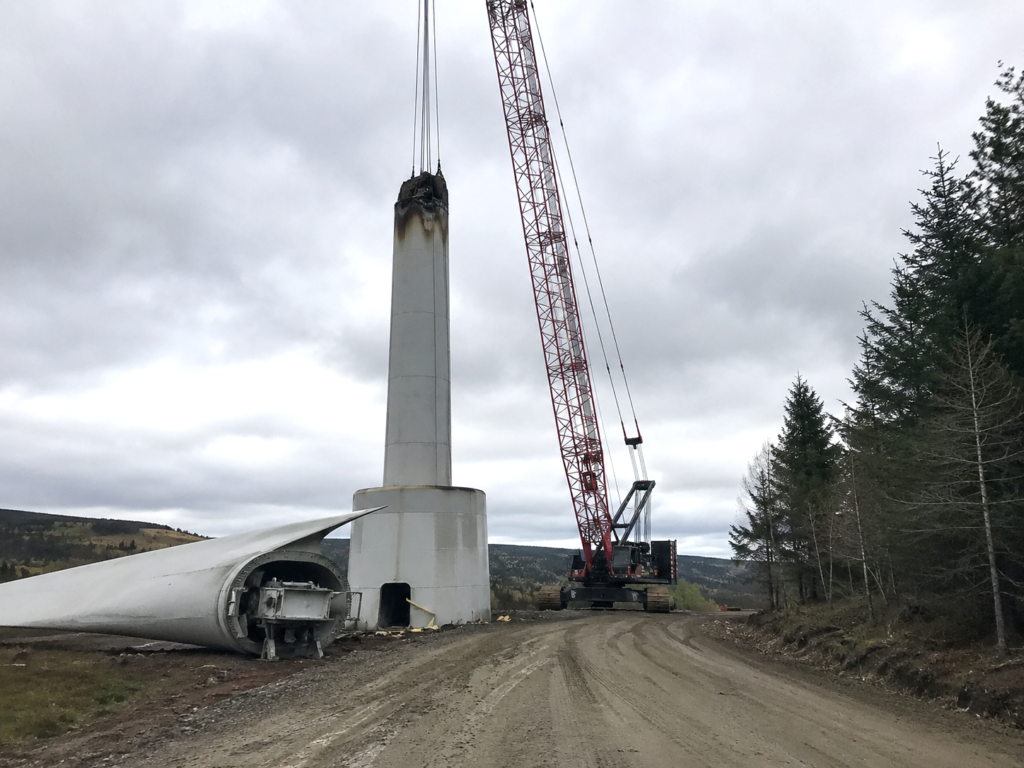
Where Decommissioning Projects Become Difficult
Across most wind turbine decommissioning projects, similar challenges tend to emerge. These are not theoretical problems – they are the points where time, cost and risk begin to increase.
One of the most persistent issues is the handling and processing of composite blades. Designed for strength and durability, these structures are extremely resistant to conventional cutting methods. Their size and construction make them difficult to segment efficiently and they often introduce additional safety and environmental considerations during processing.
Reinforced concrete foundations present a different kind of challenge. Their density and embedded steel reinforcement can make cutting slow and equipment-intensive, particularly where precision is required or access is restricted.
Steel tower sections, especially in larger or older turbines, also require careful handling. Thickness, structural integrity and location all influence how easily they can be cut and removed.
What these elements have in common is that they sit outside the comfort zone of many traditional cutting methods.
The Limitations of Conventional Approaches
Mechanical and thermal cutting techniques are widely used across heavy industry, but their performance can become inconsistent when applied to wind turbine structures.
Mechanical methods often struggle with the abrasive nature and thickness of composite materials, leading to rapid tool wear and reduced efficiency. Thermal techniques introduce heat, fumes and environmental considerations that make them unsuitable for composites and less desirable in controlled environments.
In practice, this can result in slower progress, increased downtime, and greater exposure to health and safety risks. These are the kinds of issues that directly impact project timelines and overall cost.
A More Controlled Approach to Cutting
As projects become more complex and expectations around safety and sustainability increase, there is a growing shift toward more controlled cutting methods.
Diamond wire cutting is increasingly being adopted across wind turbine decommissioning projects because it offers a controlled and adaptable way to process difficult materials. Its ability to cut composites, reinforced concrete and thick steel sections with reduced vibration and improved precision makes it particularly effective in challenging environments.
Vacuum brazed blades are also playing an increasingly important role in composite processing applications where cutting speed, durability and consistent performance are critical. Their ability to maintain cutting efficiency in abrasive materials makes them highly effective for wind turbine blade segmentation and other demanding composite cutting tasks.
In practice, different cutting methods are often suited to different stages of material processing. The focus is less on a single solution and more on selecting the right approach for the material, environment and operational constraints involved.
What makes these approaches effective is not just their ability to cut through difficult materials, but the way they do so. Lower vibration, improved precision and better management of dust and debris all contribute to a more predictable and controlled process. In environments where safety and efficiency are critical, this level of control becomes a significant advantage.
One example of this approach in practice can be seen in Diaquip’s renewable energy recycling project where DQ7 diamond wire technology was used to process decommissioned wind turbine blades in a controlled industrial recycling environment. The project demonstrated how specialist cutting methods can improve safety, precision and operational control when handling large composite structures.
Supporting More Sustainable Outcomes
Sustainability is an increasing focus within wind turbine decommissioning, particularly in relation to blade disposal. While recycling technologies continue to develop, one consistent requirement remains: materials must first be reduced into manageable sections before they can be transported, processed, or repurposed.
The way materials are cut has a direct impact on what can be done with them afterward. Cleaner, more controlled cuts can make handling easier, reduce secondary processing and support alternative disposal or reuse routes. In this sense, cutting is not just a technical step – it plays a role in enabling more sustainable outcomes across the project.
Focusing on What Matters in Practice
In real-world decommissioning projects, success often comes down to how effectively the most challenging elements are handled. Cutting methods that offer greater control, flexibility across materials and improved safety performance can make a measurable difference to both timelines and overall project delivery.
Rather than focusing on the broader process, the emphasis is increasingly on solving these specific, high-impact challenges. This is where specialist cutting expertise adds the most value.
Wind turbine decommissioning is not a new concept, but the scale and complexity of current projects are creating new demands – particularly when it comes to material processing.
For contractors and asset owners, the ability to deal with difficult materials efficiently and safely is becoming a defining factor in project success. Approaches that prioritize control, precision and adaptability are likely to play an increasingly important role as the sector continues to evolve.
